Hamilton SEO: Search Behavior in Hamilton, the Mountain, and the Former Communities
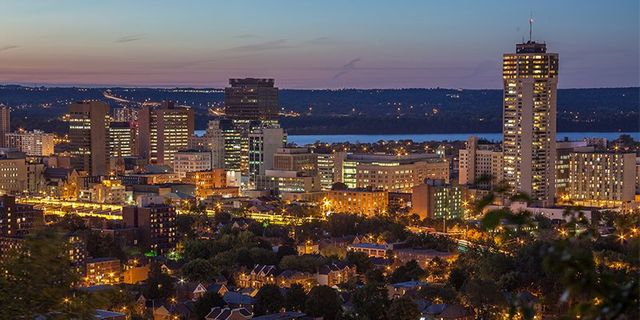
Hamilton's 2001 amalgamation merged Stoney Creek, Dundas, Ancaster, Flamborough, and Glanbrook into one city. Local search hasn't fully caught up. The variations that still matter, and what they mean for ranking in this market.
Hamilton looks like a single municipality on a map. In local search, it isn’t. Twenty-plus years after the 2001 amalgamation merged Stoney Creek, Dundas, Ancaster, Flamborough, and Glanbrook into the City of Hamilton, the former cities and towns still show up in search behavior as distinct markets. Locals know which neighborhood they’re in and search accordingly.
If you’re optimizing for a business in this market, treating “Hamilton” as the only query target leaves substantial volume on the table.
What people actually search
The Hamilton search landscape splits across multiple geographic frames.
Hamilton. The city as a whole. Often refers to the central urban core (lower city, downtown) when used colloquially. “Hamilton restaurants,” “Hamilton plumber,” “Hamilton SEO.”
The Mountain or Hamilton Mountain. The upper city, the residential neighborhoods on the escarpment. A real distinction that locals use constantly. Businesses on the Mountain often optimize for the Mountain-specific framing.
Stoney Creek. Former separate municipality on the eastern edge of the amalgamated city. Significant residential and commercial activity. Searchers in Stoney Creek often search for Stoney Creek services rather than Hamilton services.
Dundas. Former town on the western edge. Distinct identity, distinct search behavior. Often used as its own search target.
Ancaster. Former town to the southwest. Upmarket demographics, distinct identity, separate search patterns.
Flamborough and Glanbrook. The rural and small-community parts of the amalgamated city. Lower commercial search volume but legitimate distinct geographic queries.
The Hammer. Colloquial nickname. Shows up in social and informal contexts. Real but lower commercial intent.
East Hamilton versus West Hamilton. The east-west axis splits the lower city. Industrial east versus more residential and educational west. Some queries split along this line.
Variations and edge cases
- Hamilton ON or Hamilton Ontario. Disambiguation queries (Hamilton, Bermuda, Hamilton, Scotland, and others compete for the unqualified term).
- Hamilton-Wentworth. The former regional designation before amalgamation. Older residents and longstanding businesses still use it occasionally.
- GTHA (Greater Toronto Hamilton Area). Frames Hamilton as part of the broader GTA-extended region. Used in some commercial and real estate contexts.
- Burlington adjacency. Burlington borders Hamilton but is its own municipality. Cross-search confusion is real, especially for businesses in west Hamilton or near the Skyway.
What this means for local SEO in Hamilton
Practical takeaways for businesses serving this market.
Don’t lump Stoney Creek, Dundas, and Ancaster into a single “Hamilton” page. Each has its own search activity and its own commercial character. Businesses with genuine service to those communities should have dedicated content. The boilerplate trap (same page, swapped name) doesn’t work; real content for each does.
The Mountain is its own thing. Many Hamilton residents who live on the Mountain search for Mountain-specific services, especially when delivery, service area, or commute time matters. A business that genuinely serves the Mountain should have content reflecting that, including the specific neighborhood references locals use (Concession Street, Upper James, Mohawk).
East versus West matters less in search than in real life. The east-west split is real culturally and demographically but isn’t always reflected in search behavior. A “Hamilton” page covering both sides usually performs adequately, with sub-neighborhood pages for specific commercial corridors when warranted.
Decide on Burlington carefully. Some Hamilton businesses genuinely serve Burlington. Some don’t. A “Hamilton-Burlington” combined page is risky: if you don’t really serve Burlington well, you’re misleading searchers and the engagement signals will reflect it.
The GTHA framing applies in some categories more than others. Real estate, regional planning, regional government services. Less applicable for most consumer-facing local services.
For the broader local SEO framework that applies to any market, see our local SEO guide.
The Hamilton commercial landscape
A few characteristics worth noting for SEO strategy.
Hospital and medical sector concentration. McMaster University, Hamilton Health Sciences, St. Joseph’s Healthcare, the broader medical research and education concentration. A meaningful share of Hamilton’s commercial search activity touches the medical and healthcare ecosystem.
Steel and manufacturing legacy. Despite shifts away from heavy industry, Hamilton’s steel and manufacturing sector still drives B2B search activity. “Hamilton steel,” “Hamilton manufacturing,” industrial supplier queries.
Toronto overflow. Hamilton’s increasing role as a more affordable alternative to Toronto for residents and some businesses creates search behavior overlap. Some queries that would have been Toronto-only ten years ago now include Hamilton as an alternative.
The waterfront and downtown revival. James Street North, the Bayfront, the West Harbour. Specific commercial corridors with their own search activity, particularly for restaurants, retail, and creative services.
Where SEO Brothers fits in Hamilton
Hamilton is a market where we’re actively looking for an exclusive partnership with one local agency or web professional. The Hamilton agency landscape is established, and the right partnership behind a strong local agency can substantially scale organic search results for the agency’s clients.
If you run an agency in Hamilton, Stoney Creek, Dundas, or Ancaster and want a senior SEO team behind your existing client relationships, book a call and we’ll walk through what a partnership looks like.